
Based on HIA’s 2025 data, we explore seven Brisbane and Gold Coast areas showing strong residential building activity and momentum. Discover what the trends could mean for custom home builds, established land and knockdown rebuild opportunities.
 |
By David Farrer, Sales Manager at BESA With more than 25 years’ experience in new home sales across Queensland. |
The residential property market across South East QLD is entering a different phase. For anyone researching new build homes in Brisbane, that includes both new construction in growth areas and custom builds or knockdown rebuilds in established suburbs, with residential building activity still continuing across parts of Brisbane and the Gold Coast.
After years of strong growth and sustained demand, conditions are changing, and for people considering a new home build in Brisbane or the Gold Coast, that can change the conversation too.
If you already own land, are comparing suburbs, or are weighing up a rebuild instead of a renovation, the more useful question is not just what prices are doing, but where building momentum is holding up and what that means for your timing and options.
This analysis draws on the HIA Population and Residential Building Hotspots 2025 report, published by HIA Housing Industry Association. HIA defines a Queensland Hotspot as an SA2 where population growth exceeded the national rate of 2.0% in 2023/24 and the value of residential building work approved exceeded $200 million. The report also identifies areas showing more recent building momentum.
Building approvals aren’t the same as signed construction contracts or completed custom homes. But alongside population growth, they provide an indication of where residential development is continuing as the broader market recalibrates.
That makes this a useful lens for looking at where ideal home opportunities are emerging, how growth corridors compare with established land, and when a knockdown rebuild may make more sense than renovating.
Quick navigation:
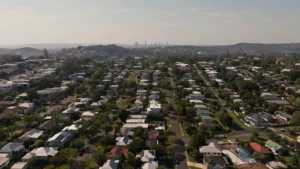
These aren’t necessarily the fastest-growing suburbs in Queensland, nor are we suggesting they’re the seven best places to build.
We’ve selected them because they tell a more relevant story for people considering a custom home build across Brisbane and the Gold Coast. From established inner suburbs experiencing renewal to premium coastal locations and one of Greater Brisbane’s major growth corridors.
HIA 2023/24: $261.2m residential building approvals | 3.3% population growth
Newstead–Bowen Hills demonstrates how differently residential growth can look within established inner Brisbane.
Rather than greenfield estates and new land releases, development here is occurring within an established urban environment where land is tightly held and new residential projects need to respond to their surroundings.
For anyone considering a custom home in an established Brisbane suburb, it illustrates an important distinction: a new home doesn’t always start with a new block.
HIA Building Momentum: $140.0m → $500.0m | +257%
HIA identifies Brisbane City as an area with potential to become a future Hotspot if population growth also meets its criteria.
Much of this activity may be multi-residential, so it shouldn’t be interpreted as a surge in detached custom homes. What it does demonstrate is continued residential investment within established Brisbane.
For custom-home clients, building within established areas presents a different design challenge: finding the right site and creating a home that responds intelligently to its orientation, planning requirements and surrounding context.
HIA Building Momentum: $15.2m → $227.4m | +1,397%
This extraordinary percentage needs context. HIA specifically identifies Yeronga among established areas where sharp increases in approvals are likely influenced by infill and multi-unit development.
Yeronga represents something more relevant than the percentage alone: the opportunity to create something new within an established community, with easy access to parks and schools.
If you already own a well-positioned block but the house no longer works for the way you live, rebuilding can offer an alternative to leaving the suburb in search of a better home.
HIA Building Momentum: $52.5m → $224.1m | +327%
East Brisbane also appears among HIA’s potential new Hotspots based on 2024 approval activity.
Like Yeronga, it’s an established inner-Brisbane location where residential renewal has to work within existing streetscapes, sites and planning constraints.
That’s where custom home design becomes particularly valuable. Instead of fitting a predetermined home onto the land, the opportunity is to consider the block first. Its orientation, dimensions, views, privacy and the way its owners want to live, and design around it.
On tighter inner-Brisbane blocks, double storey homes with thoughtful features can also provide greater flexibility to make use of the available land. Particularly where the design needs to find the perfect blend of internal space with outdoor living, privacy and orientation. Rather than choosing from predetermined double storey designs, a custom approach allows those decisions to respond to the specific block.
HIA 2023/24: $403.6m residential approvals | 15.3% population growth
2024 Building Momentum: $388.7m → $457.2m | +18%
Ripley provides an important contrast.
HIA’s strongest Queensland Hotspots are heavily concentrated in Greater Brisbane’s outer growth areas, and Ripley demonstrates the scale of that greenfield expansion.
Ripley also highlights the distinction between a traditional house and land package and a genuinely custom building journey. In one, the home is generally selected to suit available land. In the other, the design begins with the particular block, the people who will live there and what they want the home to become.
The comparison is useful because “new home build” can describe two very different journeys: selecting land within a new community, or creating something entirely individual around a particular block. Outer growth corridors such as Ipswich can also provide a different pathway into the new-home market than tightly held established suburbs.
HIA 2023/24: $631.2m residential building approvals | 3.6% population growth
Mermaid Beach–Broadbeach recorded the highest residential approval value of the seven areas considered here.
Again, the figure encompasses broader residential development and shouldn’t be interpreted as $631.2 million of detached custom homes. But this is a market BESA knows firsthand, having built for customers in Mermaid Beach.
In established coastal locations, the opportunity to create a new build home often begins with making better use of valuable existing land. Designing for the block becomes particularly important, from orientation and privacy to indoor-outdoor living and making the most of the coastal environment style.
Premium inclusions and material selections can then be considered as part of the broader architectural response, rather than being treated simply as upgrades added to a predetermined design.
HIA 2023/24: $223.5m residential approvals | 6.0% population growth
2024 Building Momentum: $148.3m → $284.3m | +92%
Hope Island recorded both population growth and a substantial increase in more recent residential approval activity. It’s another market where BESA has direct building experience.
Waterfront and canal sites can introduce their own opportunities and constraints. Rather than beginning with a predetermined floor plan, the design needs to consider the individual land, outlook, orientation, site conditions and the lifestyle the owners want to create.
For clients drawn to Hope Island’s waterfront setting and vibrant lifestyle, the design opportunity is about more than simply building a larger house. It’s about considering how the architecture responds to the water, outlook, orientation and the way the owners want to use the site.
Quick Overview of Building Activity Areas
| Area | Approval Value | Pop. Growth | Best Suited For |
|---|---|---|---|
| Newstead–Bowen Hills | $261.2m | 3.3% | Established inner Brisbane living |
| Brisbane City | $500.0m (2024) | Emerging | CBD proximity, urban lifestyle |
| Yeronga | $227.4m (2024) | Emerging | Established suburban renewal |
| East Brisbane | $224.1m (2024) | Emerging | Inner suburban custom builds |
| Ripley | $403.6m | 15.3% | Greenfield family home development |
| Mermaid Beach–Broadbeach | $631.2m | 3.6% | Coastal luxury custom homes |
| Hope Island | $223.5m | 6.0% | Premium waterfront lifestyle |
The HIA data reveals two very different stories.
Ripley demonstrates one path: secure land within an expanding residential community and build as that area grows around you.
Yeronga, East Brisbane, Mermaid Beach and other established locations present another. Here, the opportunity may start with land that already has a house on it, perhaps one you already own.
North Brisbane is also an area where BESA is looking to build more. For custom-home clients, its appeal can include convenient access to the Brisbane CBD, established schools and amenities, public transport, and proximity to Moreton Bay.
Across such a diverse area, there are great locations for people wanting to remain connected to Brisbane while creating a home around a particular block, its surroundings and their lifestyle. Depending on the location, that can also mean greater connection to discover the natural beauty of South East Queensland.
The opportunity varies considerably from suburb to suburb, which is another reason the design of a new house should begin with the individual land rather than a predetermined floor plan.
For someone considering the commitment of purchasing a custom home, that creates a useful question:
Do you need to find the right land, or are you already living on it?
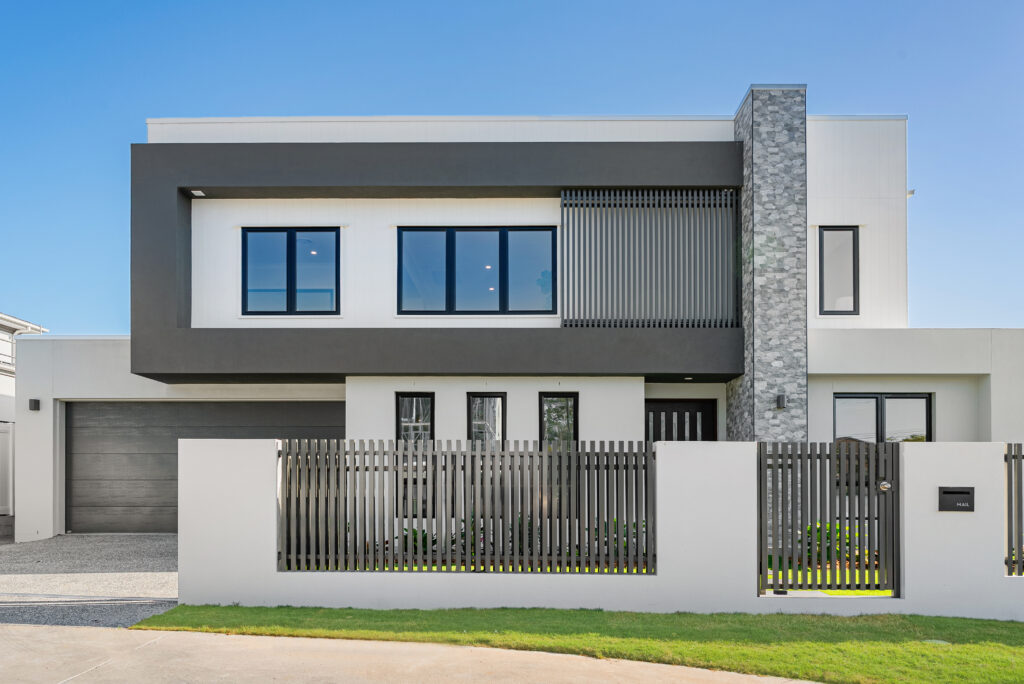
You might love your street, your neighbourhood, the walk to schools nearby and the life you’ve established, but not the house itself.
That’s where a knockdown rebuild becomes worth considering.
Starting again gives you the opportunity to design the home around the land and the way you want to live, rather than trying to make an existing structure accommodate a completely different brief.
Rather than compromising on another established property, rebuilding gives you the opportunity to reconsider how your land works: orientation, natural light, views, privacy, entertaining, family spaces and how the home should respond to the way you actually live.
One consideration with renovation is the potential for hidden costs. Existing structural conditions, services or other issues may not become fully apparent until work begins. A knockdown rebuild involves its own site and demolition considerations, but allows the new home to be designed as a complete project rather than progressively working around an existing structure.
Energy efficiency and current building standards are also worth considering when comparing renovation with a new build. New homes in Queensland are designed to meet current National Construction Code (NCC) energy-efficiency requirements, including the applicable 7-star energy rating and Whole-of-Home requirements.
A new build also comes with statutory consumer protections under Queensland’s residential building framework, including protections relating to defective building work. Together, these are some of the practical differences between adapting an older home and designing and building a new home to today’s requirements.
A knockdown rebuild isn’t automatically the right answer, nor is it necessarily cheaper than renovating or moving. The decision depends on the existing home, the block, planning requirements, budget and what you’re ultimately trying to achieve.
Understanding those specific house factors early helps you make a more informed decision about whether to retain, renovate or rebuild.
| Consideration | Renovation | Knockdown Rebuild |
|---|---|---|
| Existing home | Retains the parts of the home worth preserving | Starts again when the existing home no longer supports the brief |
| Design freedom | Design needs to work around the existing structure and footprint | Greater freedom to reconsider the entire home around the block |
| Existing conditions | Some structural or building conditions may only become apparent once work begins | Existing dwelling is removed, allowing the new scope to begin from a clearer starting point |
| Orientation & layout | Major changes can be constrained by the original home’s position | Opportunity to rethink orientation, natural light, views, privacy and spatial planning |
| Energy performance | Existing and upgraded elements need to work together | New home can be designed to current requirements as a complete building |
| Best suited to | A home worth retaining where considered changes can achieve the desired outcome | A great block where the existing home no longer suits how you want to live |
The important distinction isn’t which option is universally “better”.
It’s which approach makes sense for your home, your block and what you’re trying to create.
Property and construction markets move through cycles, and accurately predicting the next turning point is difficult.
For someone planning a long-term custom home, broader market conditions are only one part of the decision.
More useful questions may be:
For someone who has been sitting on a block or considering rebuilding, a changing market can simply be a good reason to revisit the conversation.
HIA’s data shows that residential building activity is continuing across both emerging and established parts of Brisbane and the Gold Coast.
As a broad guide, building costs in Brisbane can range from around $3,000 to $5,500 per square metre, meaning construction of a 338sqm home could range from approximately $1.01 million to $1.86 million, depending on the site, design, specification and scope.
There are expanding communities such as Ripley, established Brisbane locations experiencing residential renewal, and tightly held coastal areas such as Mermaid Beach and Hope Island where creating a new home can mean making better use of existing land.
For a custom-home client, the most important opportunity may not be finding the next property hotspot.
If you’re considering a custom new home or knockdown rebuild in Brisbane or the Gold Coast, the first step in the building process is understanding your land, your ideas and the way you want to live. From there, BESA can help you determine what’s possible and the most appropriate path forward.
At BESA, custom home construction typically starts from around $2,700–$3,500 per square metre, depending on the design, site conditions and level of specification. The more useful starting point, however, is understanding what you’re trying to create and what your block requires.
If you’re working with a smaller budget, you may not need to begin with a completely blank page. BESA also offers a collection of thoughtfully chosen home designs, providing a more defined starting point while still allowing you to make considered choices around your home, facade and inclusions.
Whether you’re starting with vacant land, an established property or a home that no longer works for you, the goal is the same: to find the right path to a quality home that is built around the way you want to live.
Considering a custom home or knockdown rebuild? Rather than a virtual tour, visit our Canopy display home at Fig Tree Pocket to experience BESA’s approach to design, detail and craftsmanship firsthand.
Canopy is open by appointment only, giving you the opportunity to explore the home and discuss what you’re planning with our team.
We invite you to experience Canopy privately.
David Farrer | Sales Manager, BESA
David brings more than 25 years of experience in new home sales. At BESA, he works closely with clients considering custom homes and knockdown rebuilds across Brisbane and the Gold Coast, helping them understand their options and make considered decisions around their land, budget and new home.
Meet David and the BESA team →
Source: Population growth and residential building approval figures referenced in this article are drawn from the HHIA Population and Residential Building Hotspots 2025 report, published by HIA. This report is available to members and for purchase through HIA. Building approval values should not be interpreted as signed construction contracts, completed homes or exclusively detached custom homes.